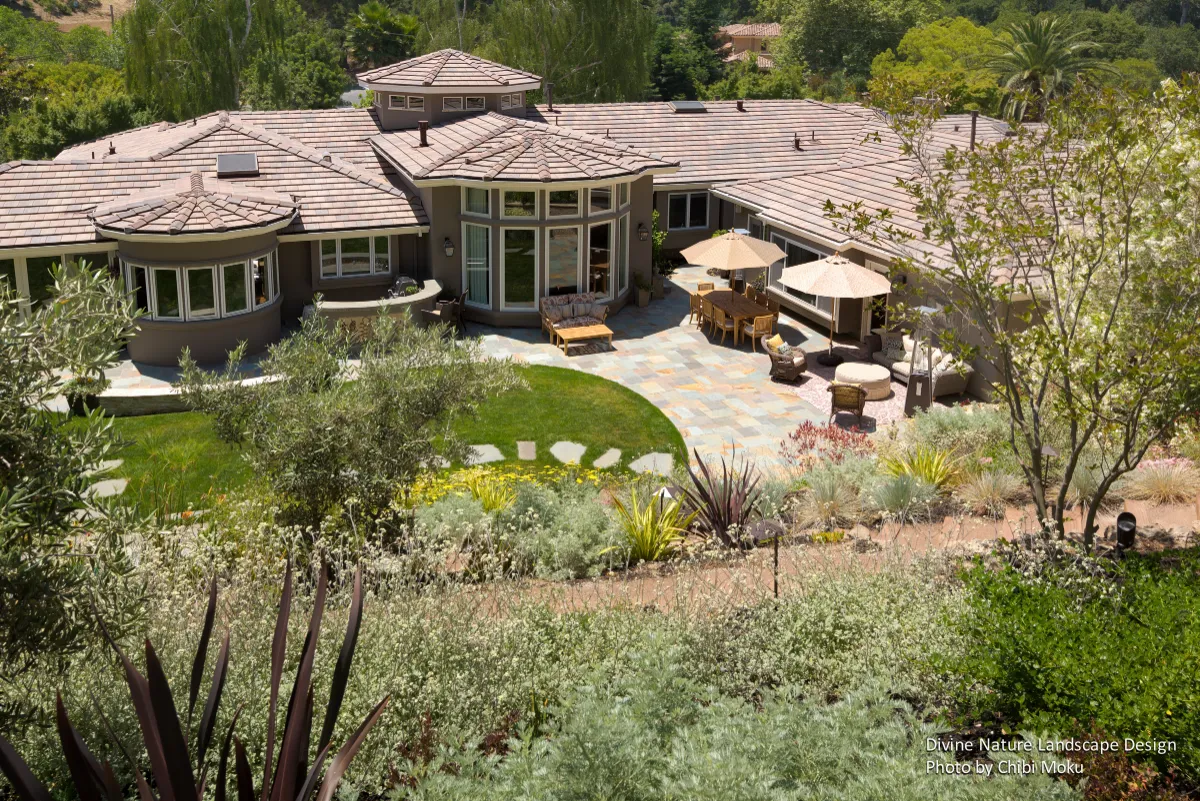
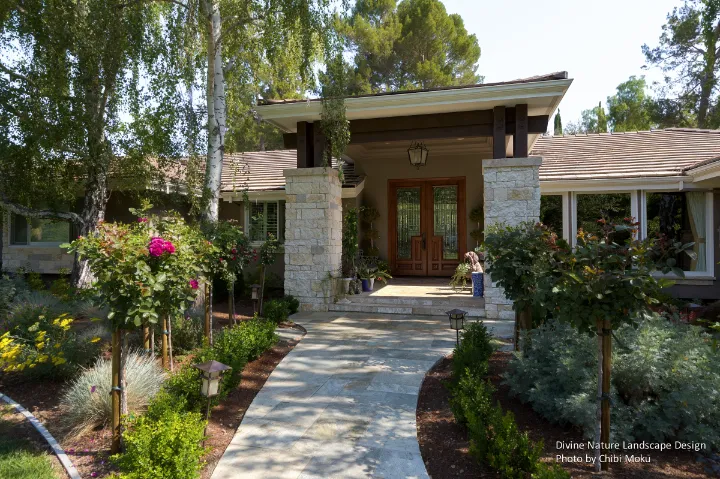
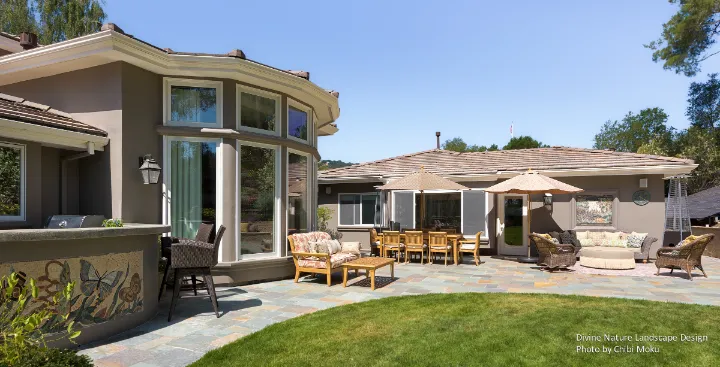
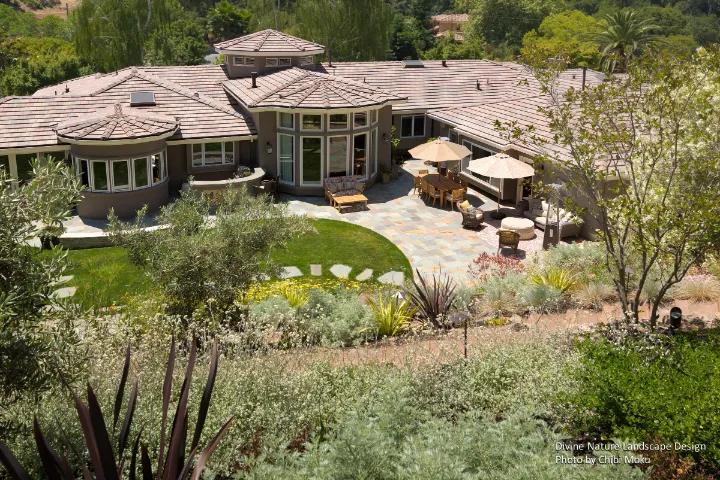
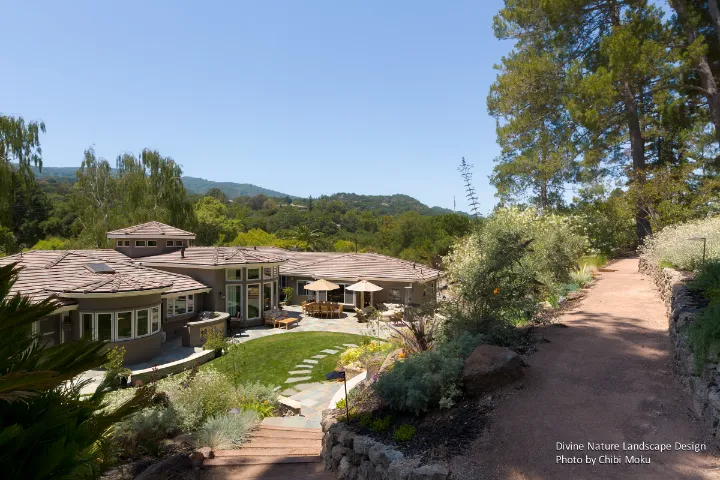
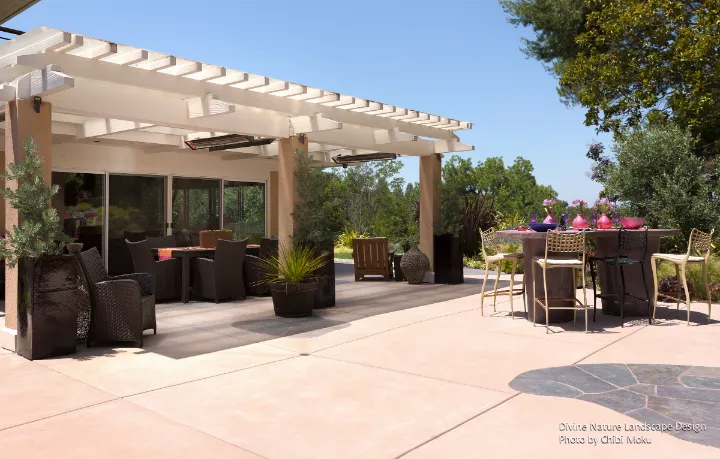
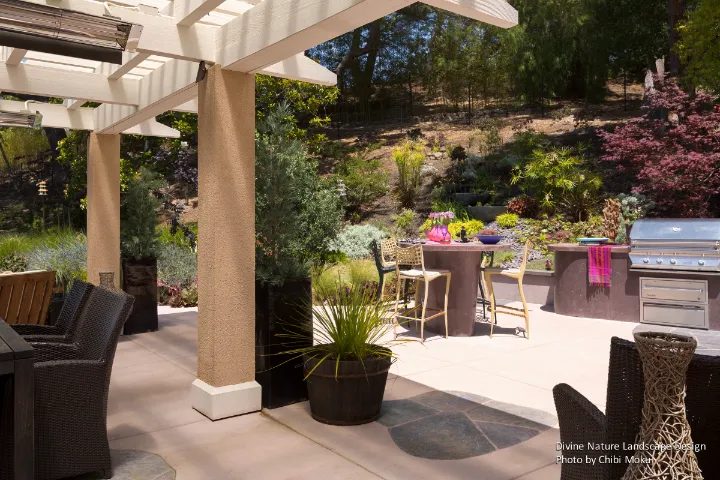
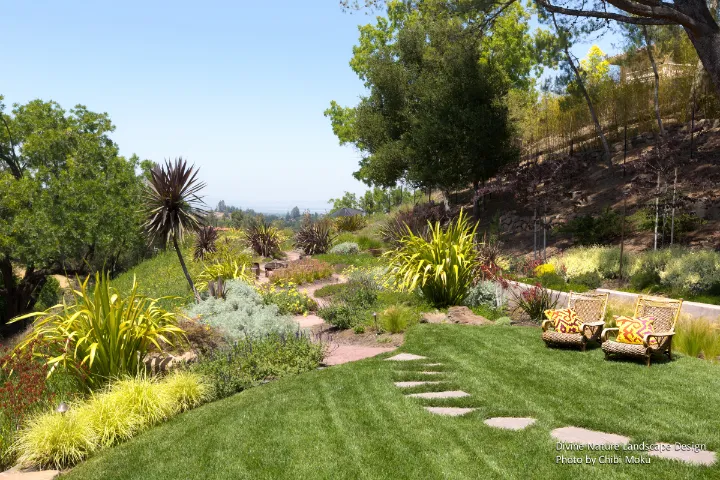
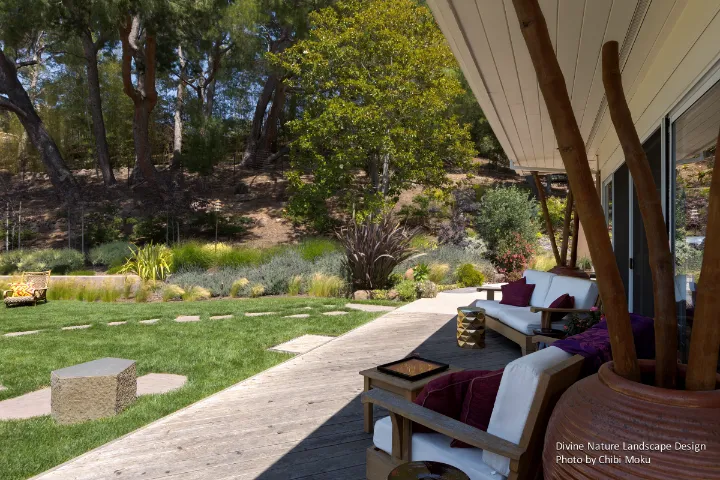
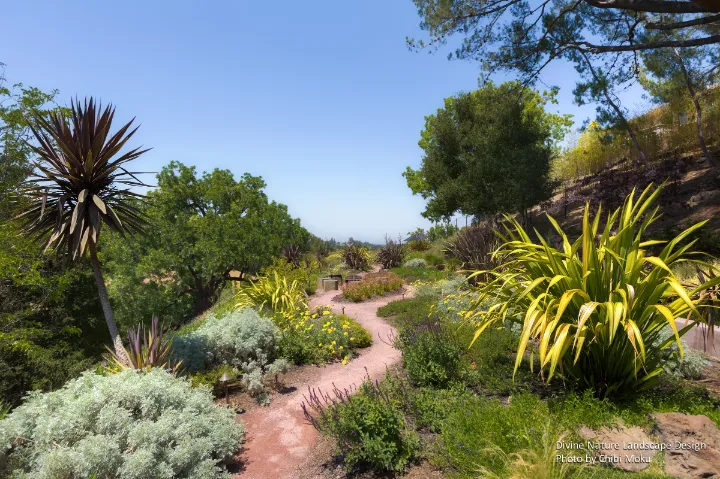
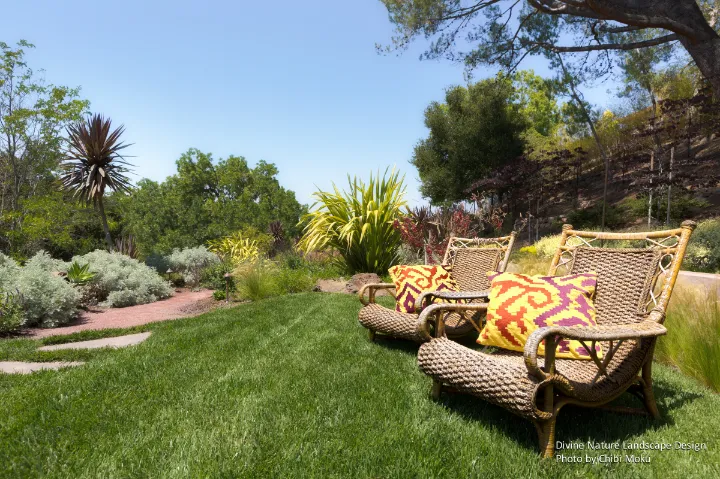
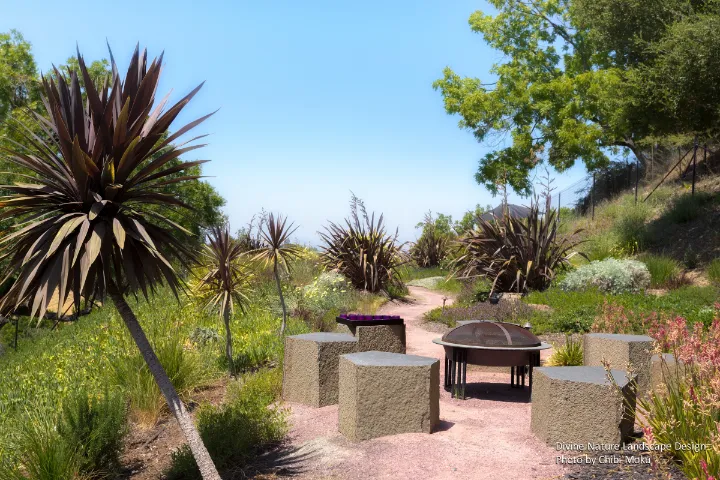
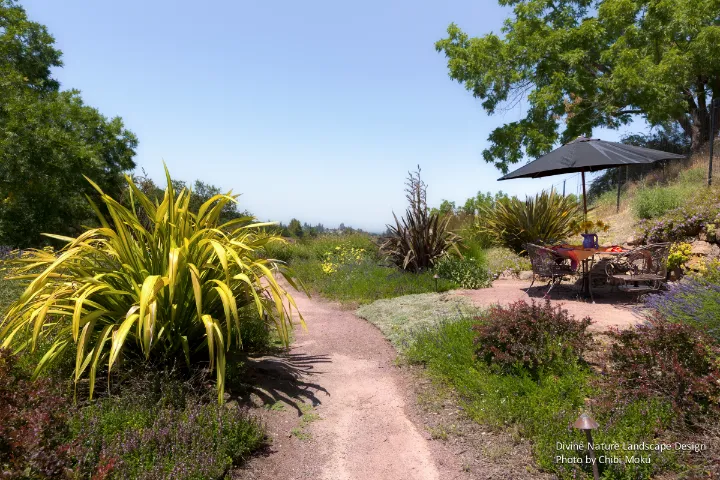
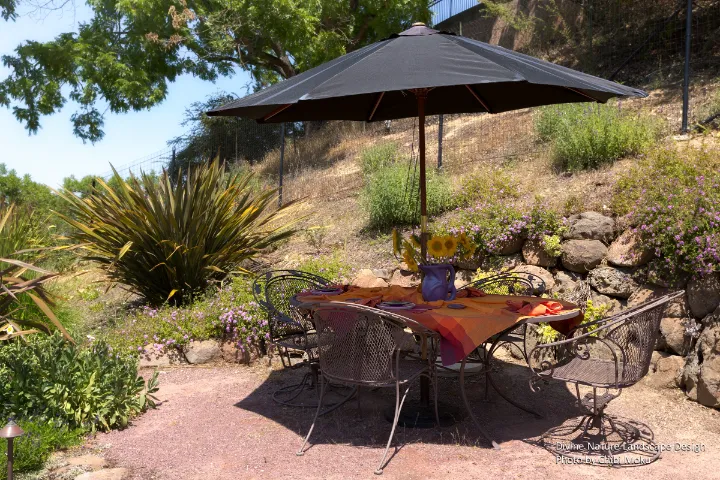
This Hillside Restoration project by Divine Nature Landscape Design in Los Gatos, California is a strong example of how landscape architecture can organize a difficult site into a sequence of usable outdoor rooms. Rather than treating the hillside as a single sweeping yard, designer Johnna Brooks breaks the property into intentional zones connected by circulation, elevation changes, and sensory anchors. The design reads as an experience of movement: arrival, pause, climb, branching choices, and discovery. Johnna frames her approach simply but powerfully, saying, “You have to look at each space like it is something unique and then tie them together and then there’s a nice flow.”
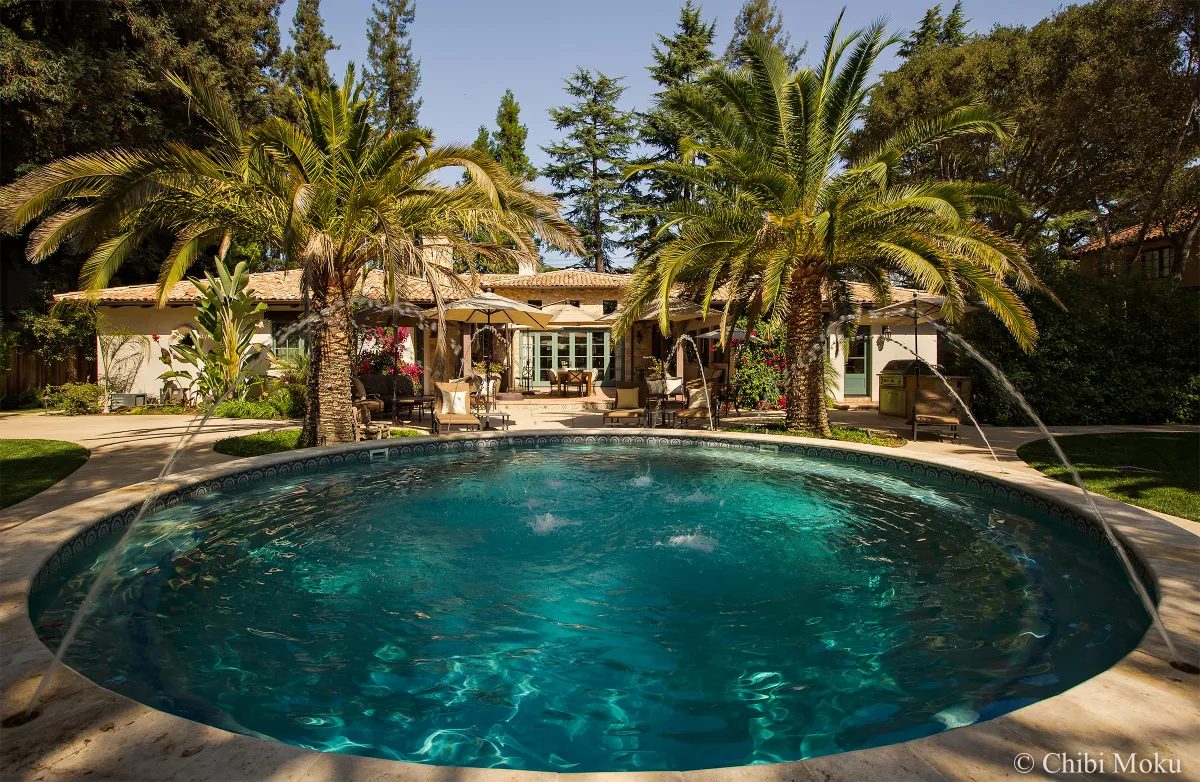
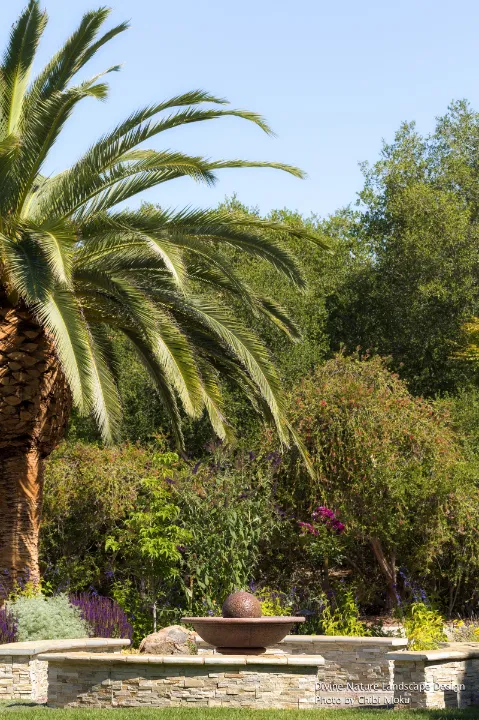
At the front of the home, the project begins with an invitation to slow down. A seating area with a water feature becomes a transitional space between public street and private garden. Johnna describes the decision with clarity: “There is a seating area with a water feature that invites you to go to sit down and then explore the rest of the front yard landscape.” This establishes one of the project’s core strengths: landscape elements are used not just for beauty, but for psychological orientation. Even the placement responds to the site’s existing presence, as she notes the composition beside a large palm: “It just seemed balanced to me… the Canary palm is there to the left so it just works.” The design begins by creating calm, then guides you forward.
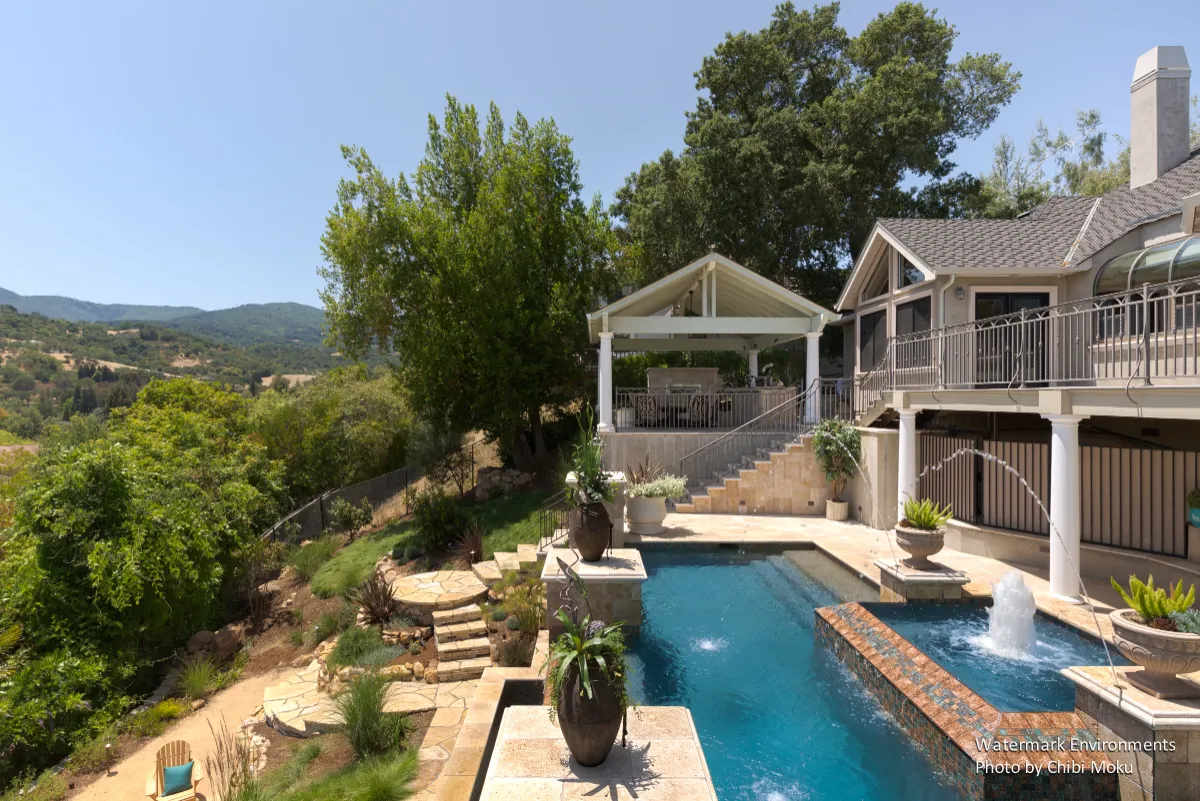
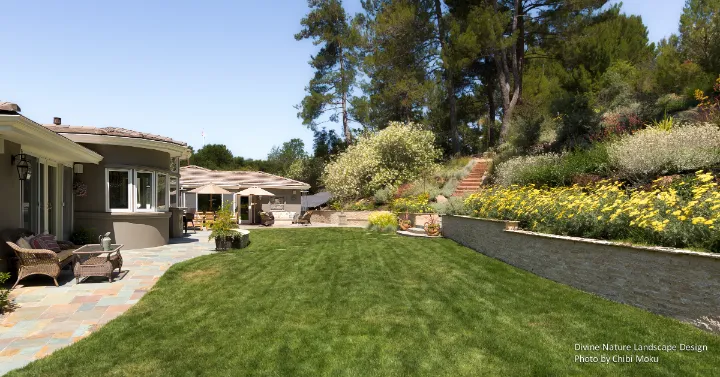
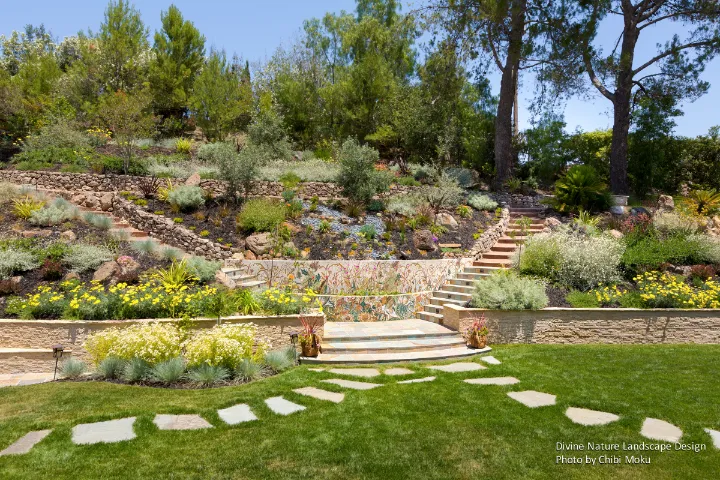
The hillside itself becomes a carefully staged system of levels. Instead of a single staircase, the garden uses landings, transitions, and split pathways to make the climb feel natural and even social. Johnna narrates it like a plan drawing in motion: “I see a step that goes up to landing and transitions to right and left… right side you go up to fire pit area, and if you are up at the transition area and go left you can get up to the child’s play area.” This is smart landscape planning because it lets multiple programs coexist without fighting each other: adult entertaining, kids’ activity zones, and circulation that loops rather than dead-ends. The addition of a putting green and connecting walkways reinforces the project’s goal of daily usability, not just visual impact.
What makes Divine Nature’s work stand out here is that the design is rooted in the homeowners’ real lives and emotional needs, not an abstract concept. Johnna emphasizes the clients’ busy pace and the garden’s role as a reset: “Everybody needs to get outside… they got to breathe the air, they got to hear the birds, they got to hear the water because that’s how we rejuvenate.” Even her creative philosophy is framed as reconnecting to something older and more human: “I got to tap into nature… you got to talk to your plants.” The result is a landscape that feels structured and purposeful while still reading as lush and personal, shaped as much by circulation and function as by atmosphere and restoration.