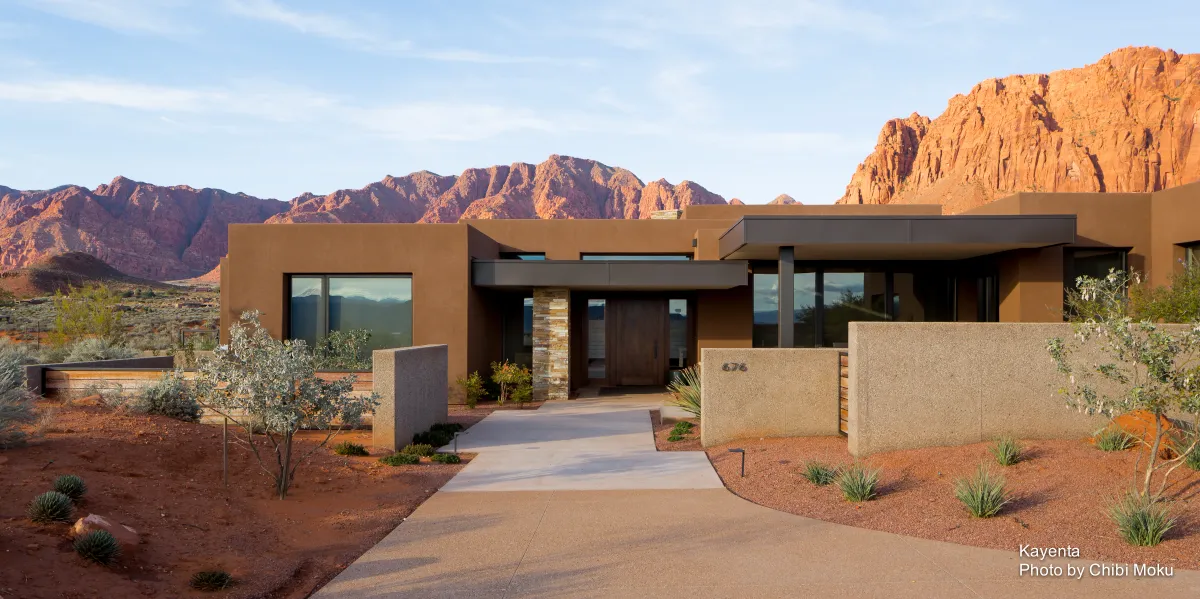
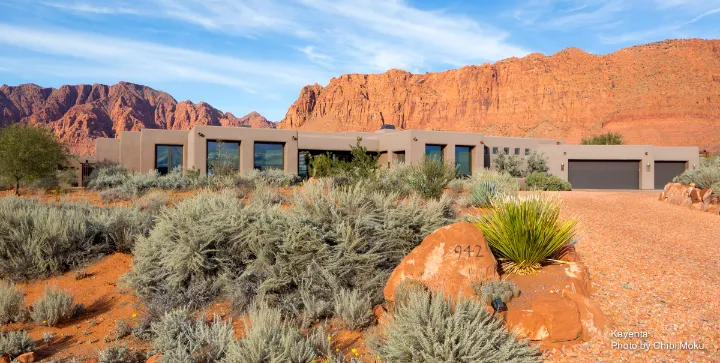
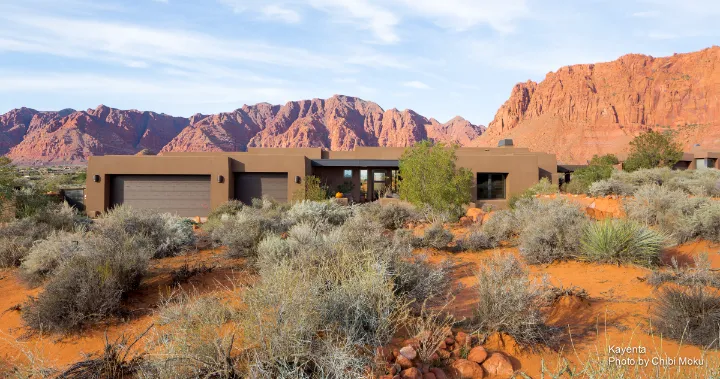
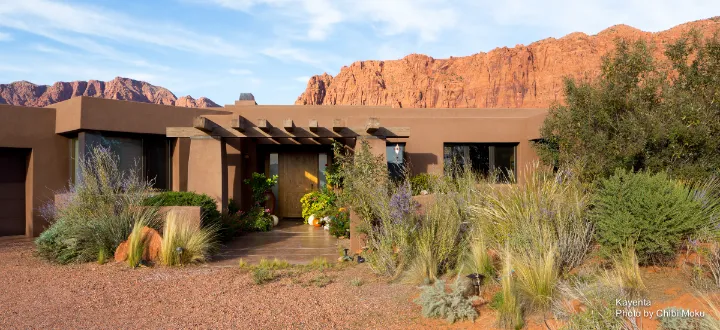
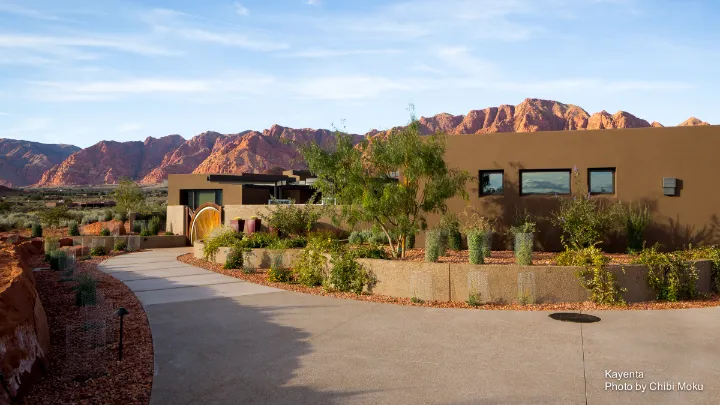
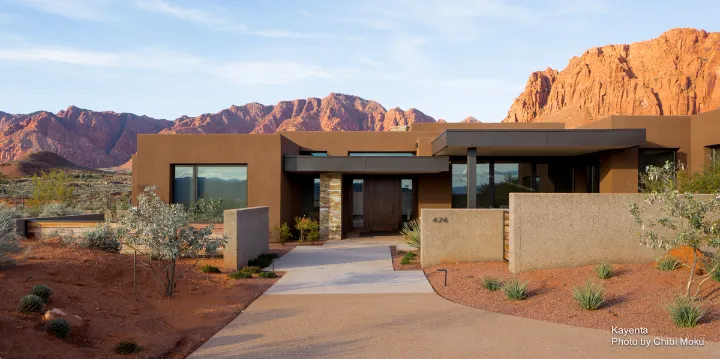
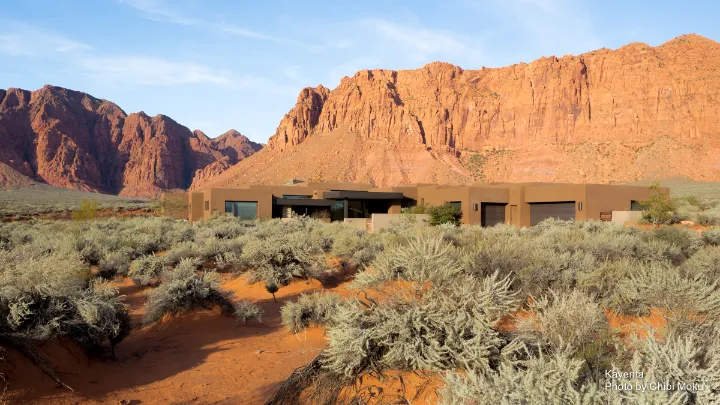
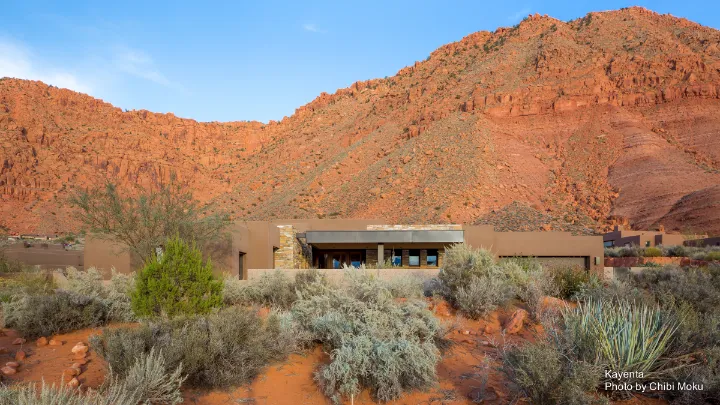
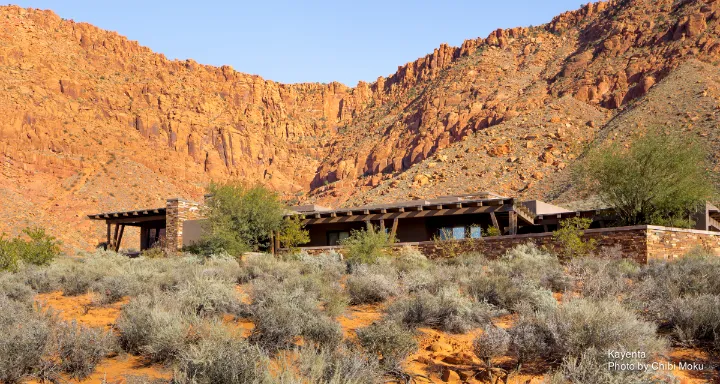
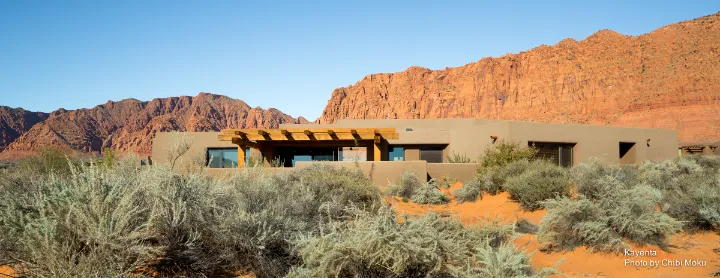
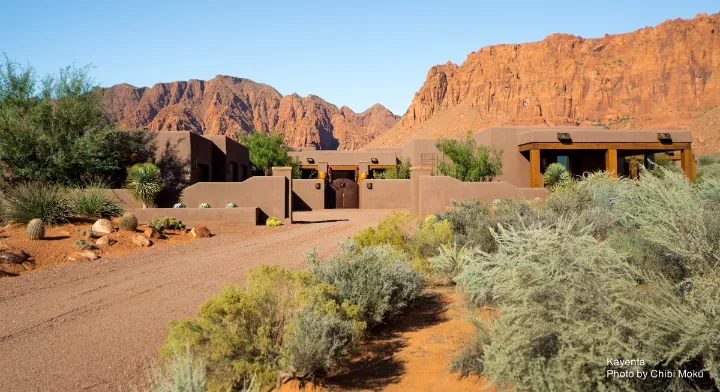
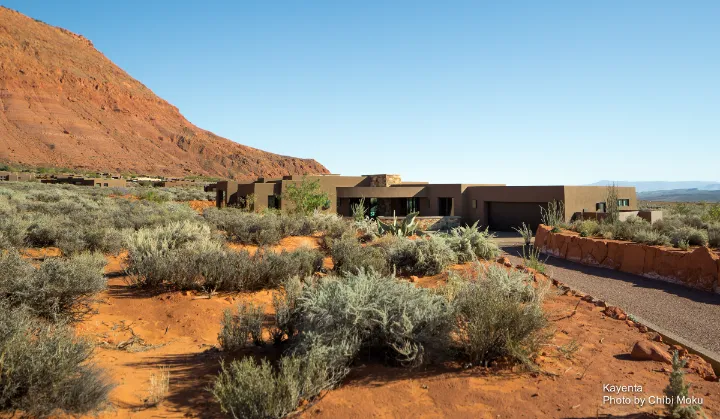
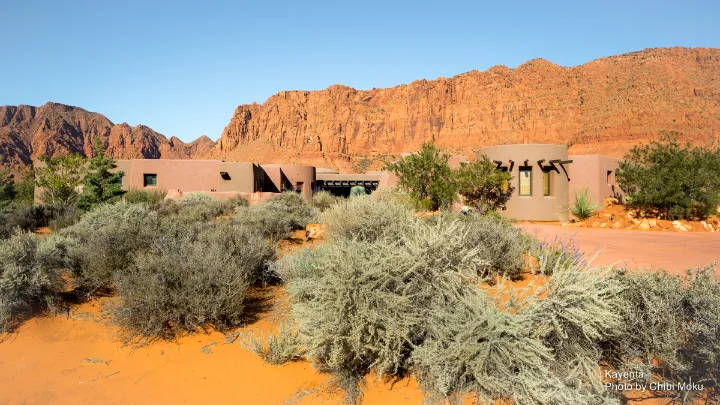
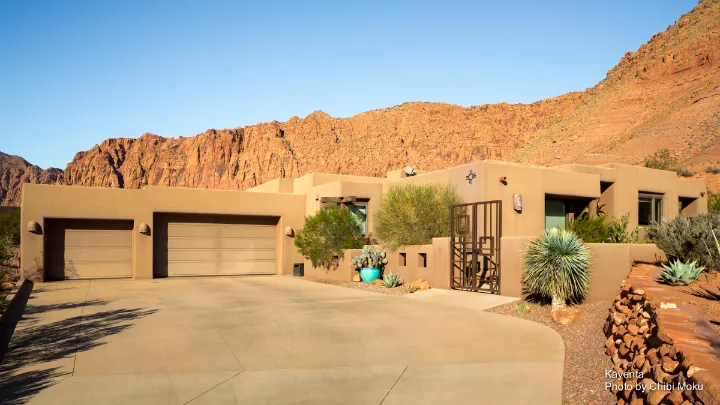
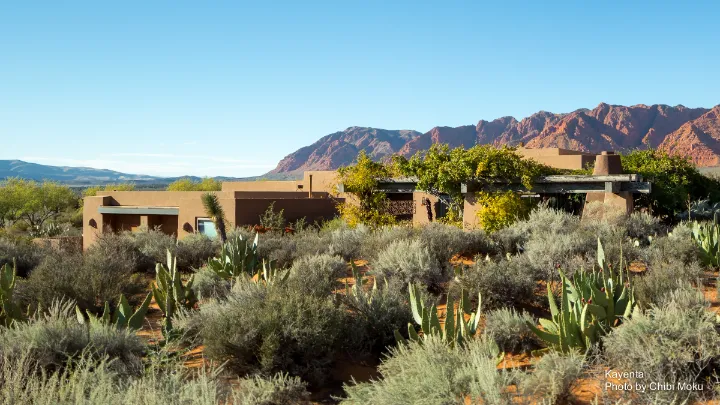
Kayenta is a master planned desert community in Ivins, Utah, shaped as much by land stewardship as by aesthetics. Led by developer Terry Martin and later joined by Matt Martin, the project grew over decades into a community of 500+ homes set within red rock country near St. George. From the beginning, the goal was to “maintain the natural beauty of the area,” treating the cliffs, prairie flats, and crisp desert air as the primary “architecture” that everything else should respect. Residents describe the setting as dynamic and restorative, a place where the changing light and shadows make the same view feel new, and where the quiet at sunrise or sunset turns the landscape into something almost ceremonial.
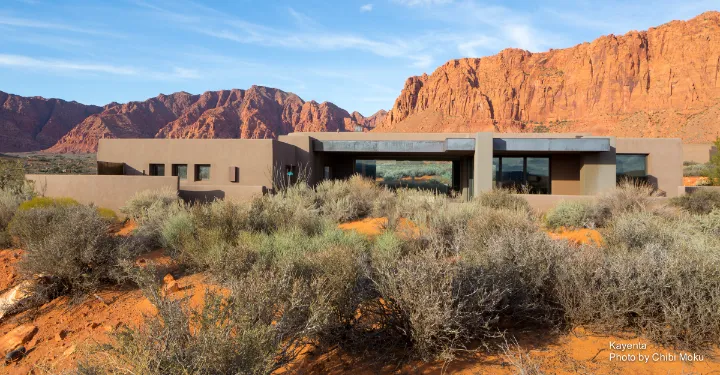
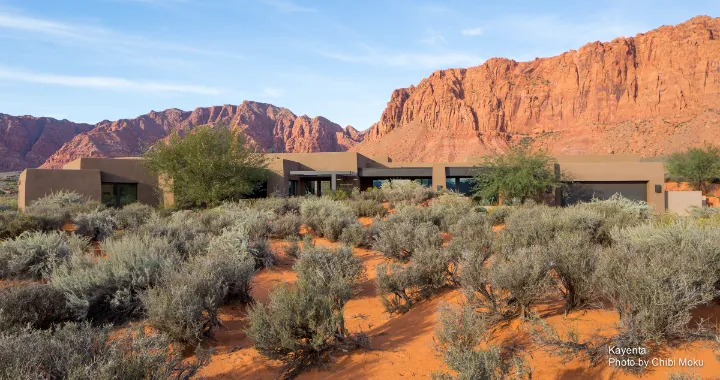
A big part of Kayenta’s design logic starts with the ground itself. The community sits on an alluvial slope where water naturally runs off through a network of washes, including the Kayenta Wash and others that drain toward the Santa Clara River. That hydrology is not treated like a nuisance to be buried, but as a real planning constraint that organizes streets, lots, and open space. Terry Martin describes “huning in the home into the natural landscape,” and the broader guideline follows that idea: keep the native terrain dominant, with building and ornamental landscape “subservient” to it. In practice, the community aimed to maintain roughly 70% of the land in a natural vegetated state, which helps the desert read as continuous rather than chopped into isolated yards.
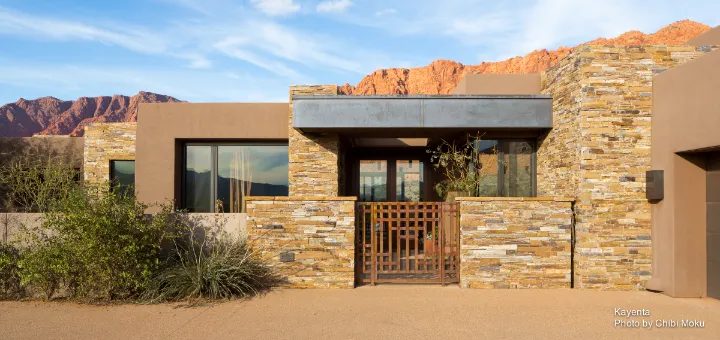
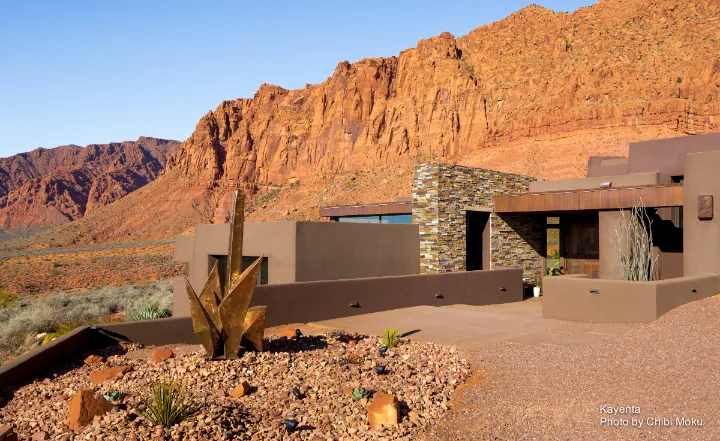
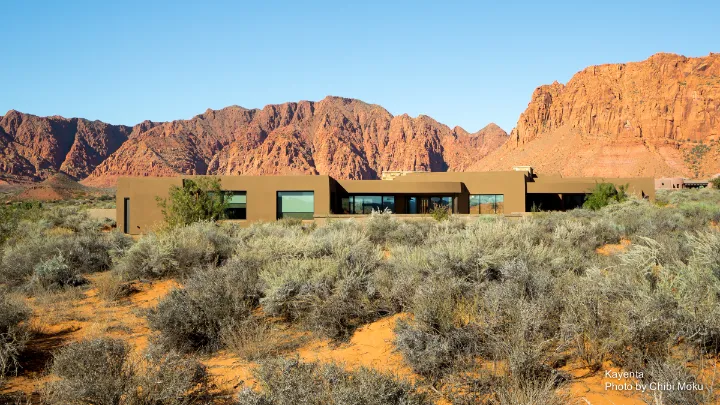
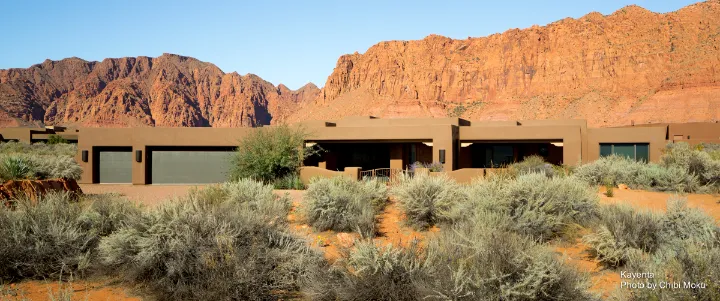
Architecturally, Kayenta developed what locals often call a recognizable “Kayenta style,” even though the interiors and individual houses can be wildly different. The shared thread is a low, earth-hugging massing that fits the desert’s horizontal scale. As one speaker puts it, tall homes or bright colors “stand out like a sore thumb,” so the community’s palette evolved toward darker tones that blend with sage brush greens and grays rather than trying to copy the orange of the cliffs. Over time, the neighborhood shifted from early Santa Fe leanings toward a more contemporary desert vocabulary, but still grounded in the idea of clustered volumes. The homes are often described as composed of “stuccoed boxes, volumes, shapes put together” with balanced proportions, softened edges, and courtyards that let residents “create your own environment” and control views in a dense community.
Kayenta’s story is also about an arts ecosystem that is physically embedded into the plan, not added as a marketing layer. The documentary tracks the growth of the village and its creative anchors, including the early push to build a café and gathering spot, plus studios and galleries that give residents reasons to walk, linger, and meet. One artist describes the place as “a community of artists” across mediums, and another notes how the setting encourages both making and appreciating art, where “art appreciation and creating art kind of come together.” The community’s architecture supports that culture with patios, courtyards, shaded outdoor rooms, and a general emphasis on spaces that feel lived-in and personal rather than purely showpiece.
What makes Kayenta worth documenting is that it treats development as a long-form design practice, with Terry Martin’s patience and iteration at the core. A resident credits him for the foresight that “if you put an art village, they will come,” and another points out how Matt Martin’s siting skills capture specific view moments window by window. Even the everyday talk in the film reinforces the larger philosophy: this is a place built through “thousands of baby steps,” and the hope is that people “can appreciate the effort” of doing something slightly different, then protect it by letting it be what it needs to be. In a region where growth often competes with the landscape, Kayenta’s most consistent design move is restraint, building a community that looks like it belongs to the desert rather than trying to conquer it.