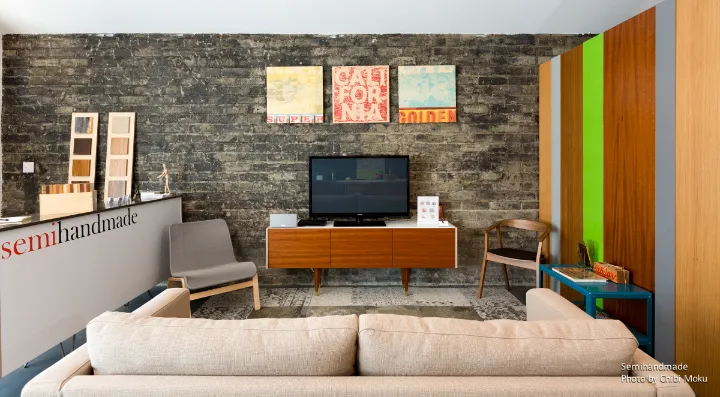
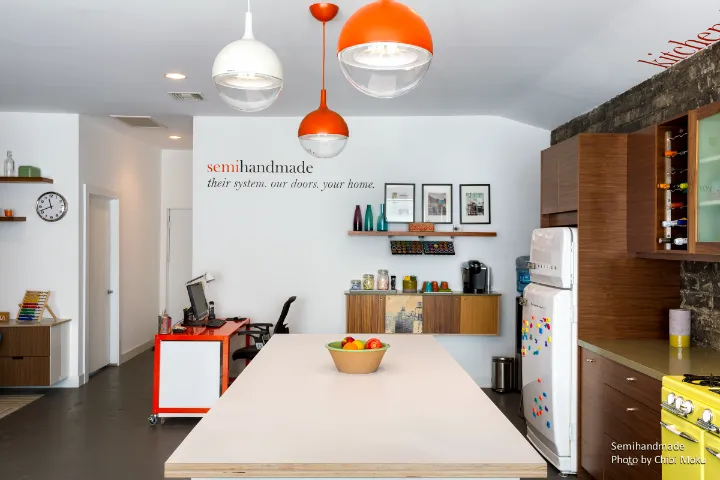
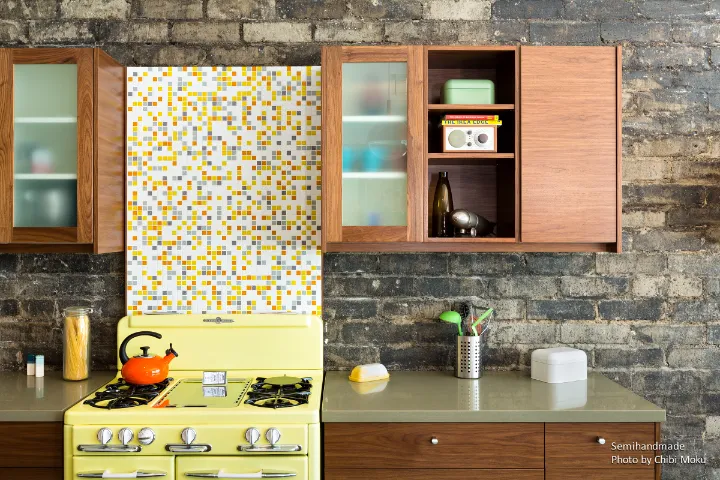
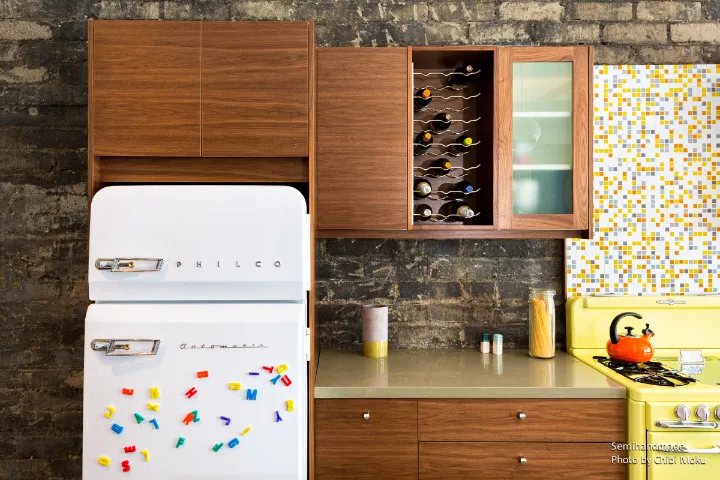
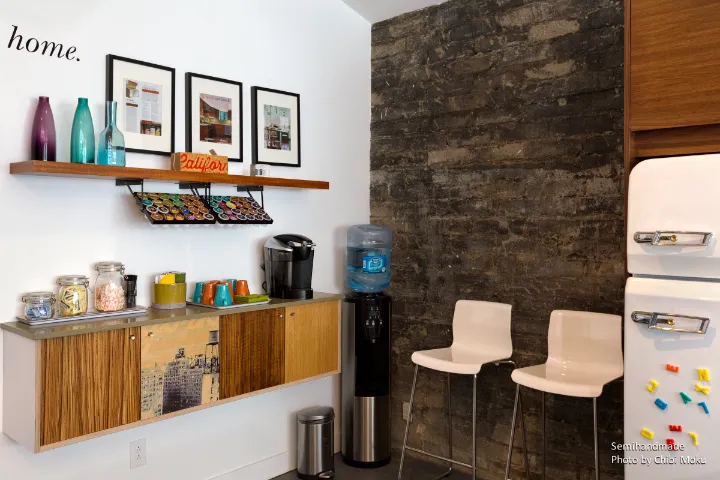
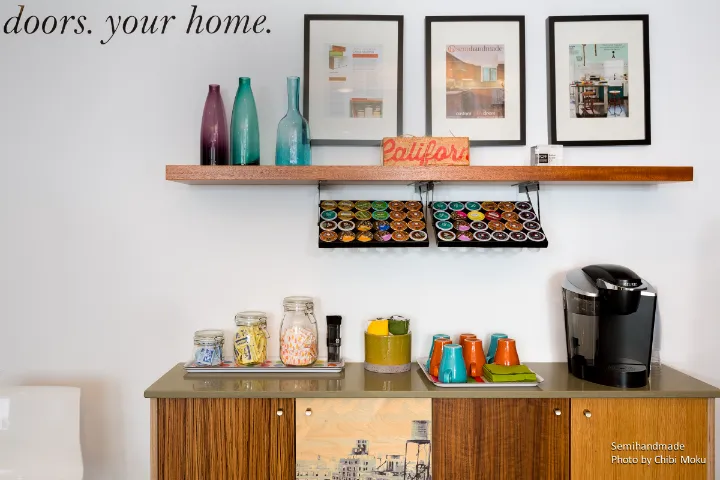
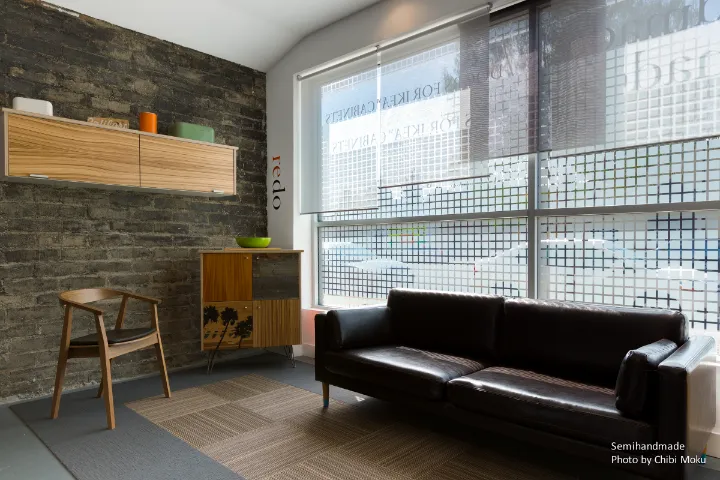
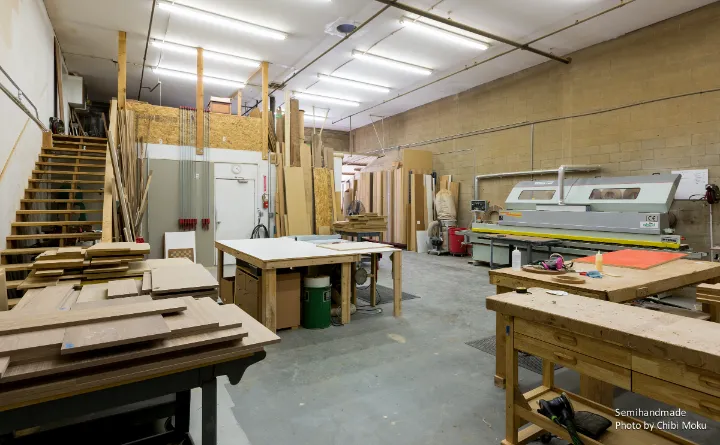
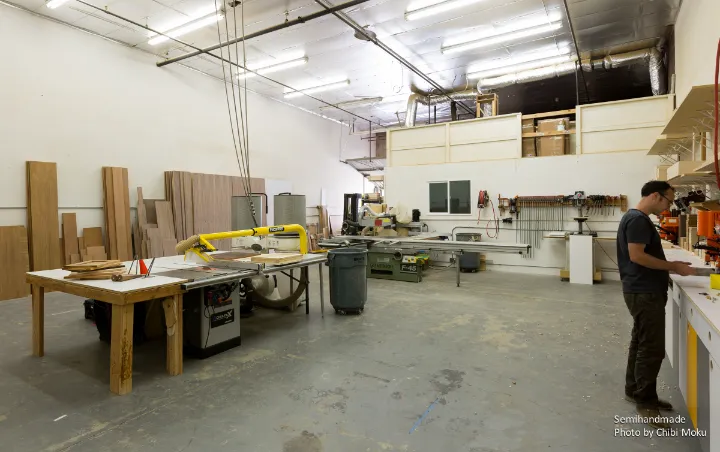
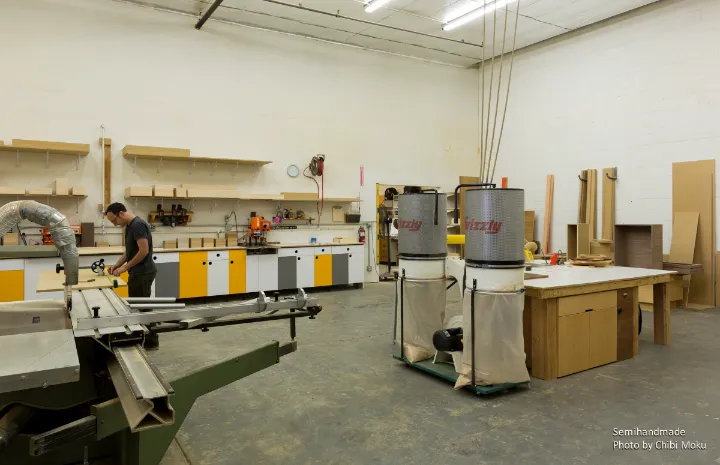
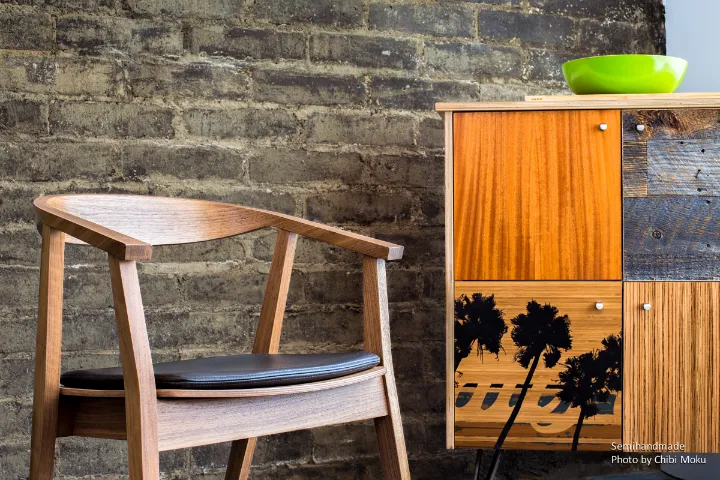
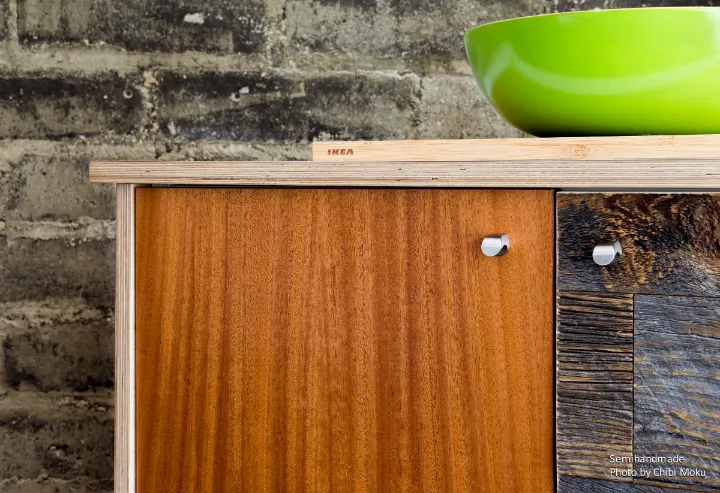
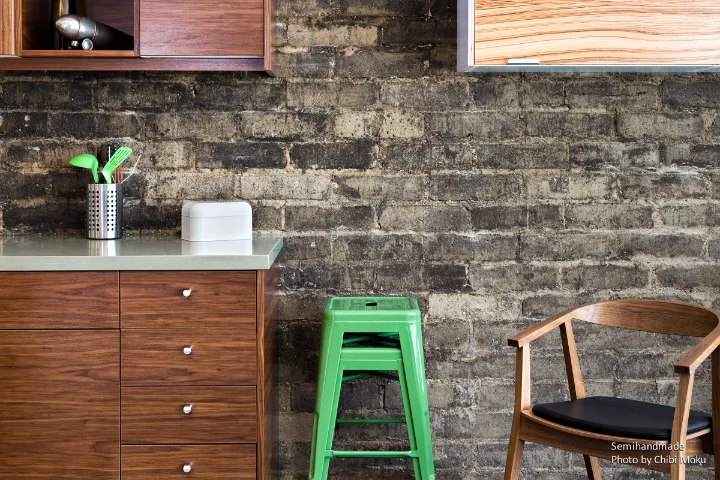
Semihandmade is an example of how smart product design can elevate everyday architecture without requiring a luxury budget. Based in Duarte, California, the company was founded in 2010 by John McDonald, who shifted from a career path in screenwriting and service work into a craft-driven manufacturing business. The premise is direct and incredibly effective: use IKEA cabinetry as the standardized base, then apply custom-quality woodworking, veneers, and finishes to create cabinet fronts that look and feel like high-end millwork. The result is a hybrid system where affordability and consistency meet design intention and material richness.
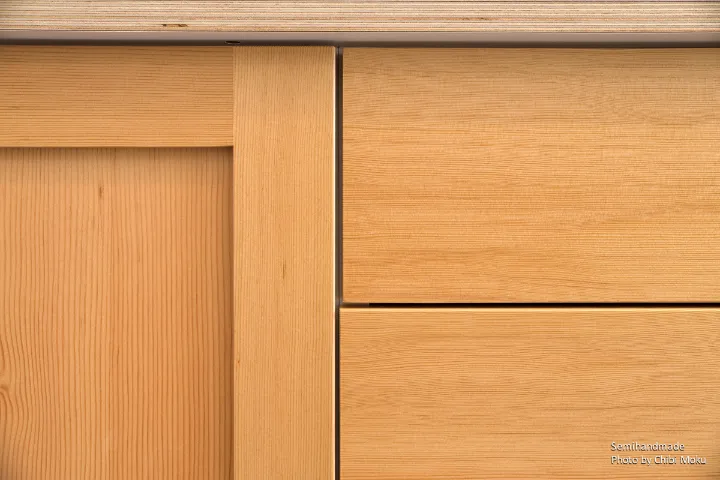
What makes the Semihandmade approach architecturally interesting is that it turns cabinetry into a modular design language. Cabinet doors are not treated as interchangeable parts. They are treated as a “face” of the interior, capable of defining tone the way flooring, lighting, or wall material does. A big part of their signature is sequence-matched veneer, where an entire kitchen or room can be cut from a planned set of sheets so the grain reads continuously. As one person describes it, everything in the home might be “cut from the same sequence of sheets,” making planning a critical first step, even if it looks like “a mad man’s little scribbling pad.” That mindset places the work firmly in the realm of design discipline, not just fabrication.
The transcript also makes clear how much this kind of product relies on careful technical coordination. Because the cabinet boxes come from IKEA, the craft layer must align perfectly with IKEA’s system. Drilling patterns, hinge cups, drawer hardware placement, and tolerances are all planned around the IKEA dimensioning. They note that everything is “pre-drill[ed]… to fit IKEA,” including hinges and drawer components. This is the invisible part of good design: not only making something beautiful, but making it work flawlessly with a standardized system, so the homeowner, contractor, or architect can specify it confidently.
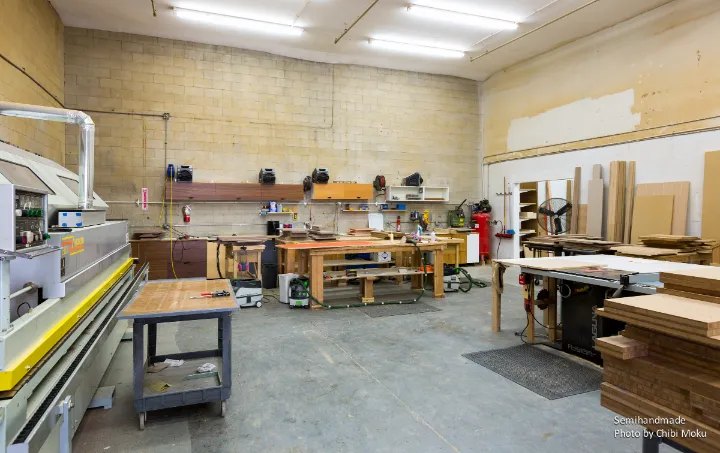
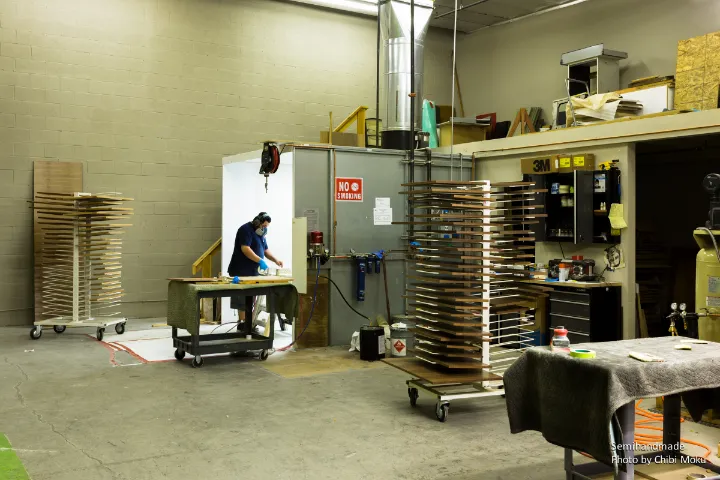
Another design takeaway is how Semihandmade frames quality control as part of the architecture of the product. The sanding and finishing stages carry serious responsibility, because after finishing “it’s locked in.” That line captures a major truth in fabrication and interiors: surface prep is not cosmetic, it is structural to the final appearance. The team describes the sanding crew as the “first line of defense” against blemishes and imperfections, and the packing process as equally detail-focused so every component arrives looking as refined as when it left the shop. The product is designed not only for installation, but for delivery, handling, and real-world use.
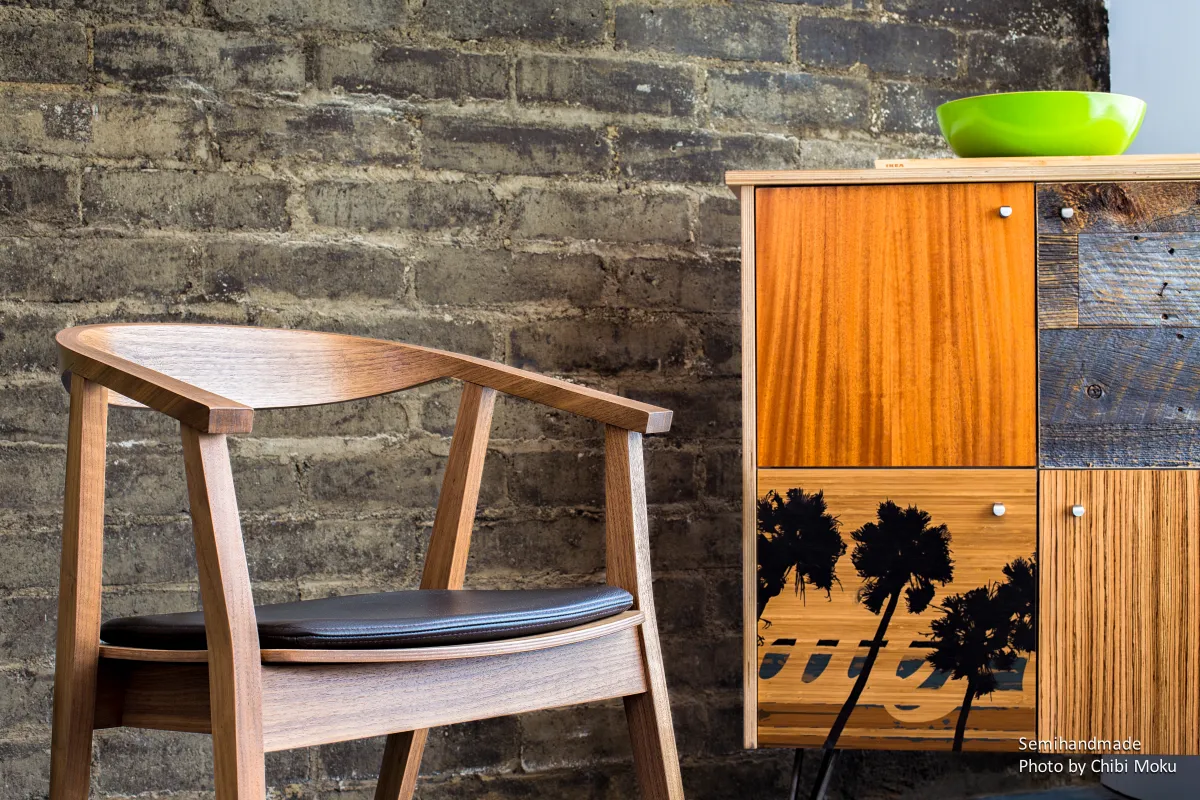
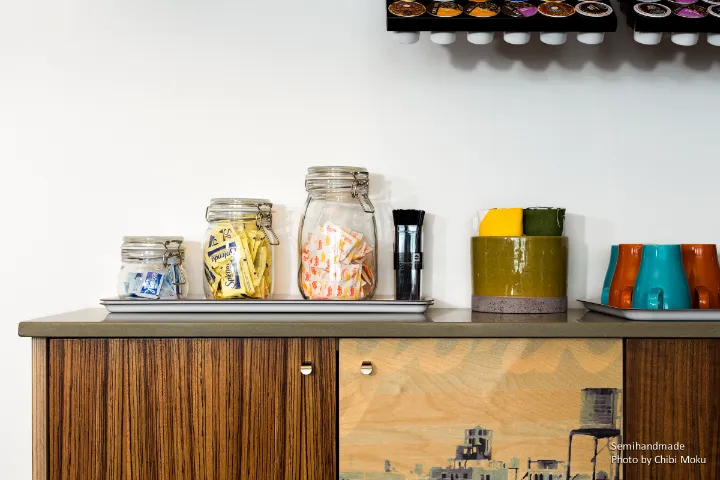
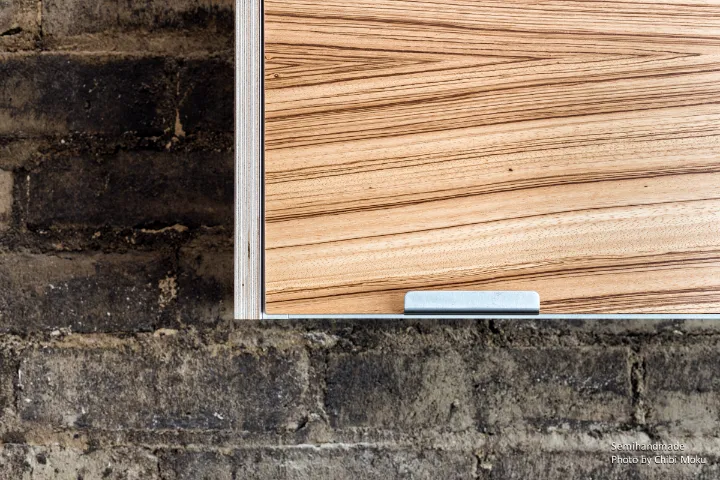
Finally, the range of materials gives the company’s system its design versatility. The catalog includes Walnut, Teak, Mahogany, reclaimed lumber, bamboo, zebrawood, and more, along with shaker profiles and laminate options. In architectural terms, this turns a single cabinet platform into something more like a material palette, where you can tune a project toward warm modernism, mid-century restraint, rustic reclaimed texture, or crisp contemporary minimalism. Semihandmade’s growth from a small operation into a team of more than twenty people, plus showrooms in Los Angeles and Burbank, reflects the strength of the concept: it gives designers and homeowners access to custom character while staying grounded in a rational, buildable, repeatable system.