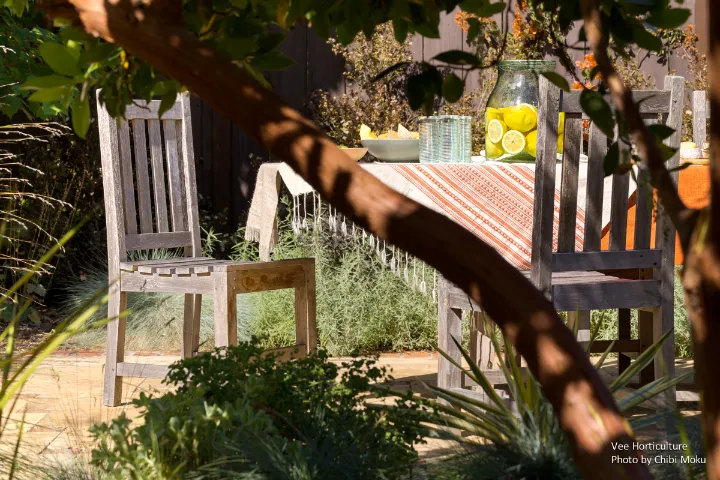
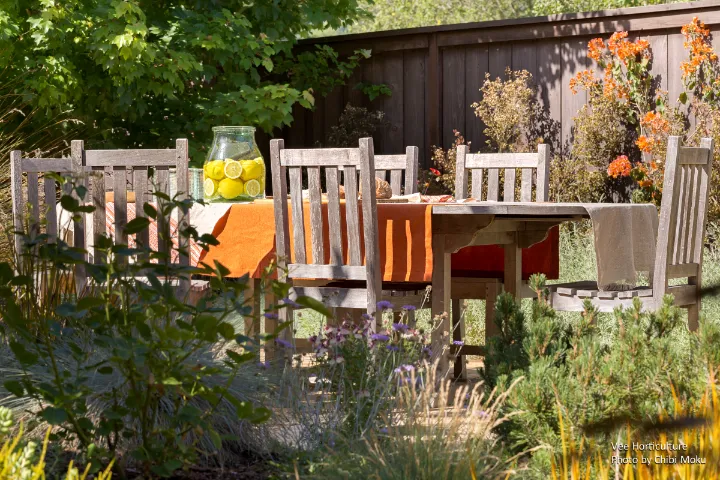
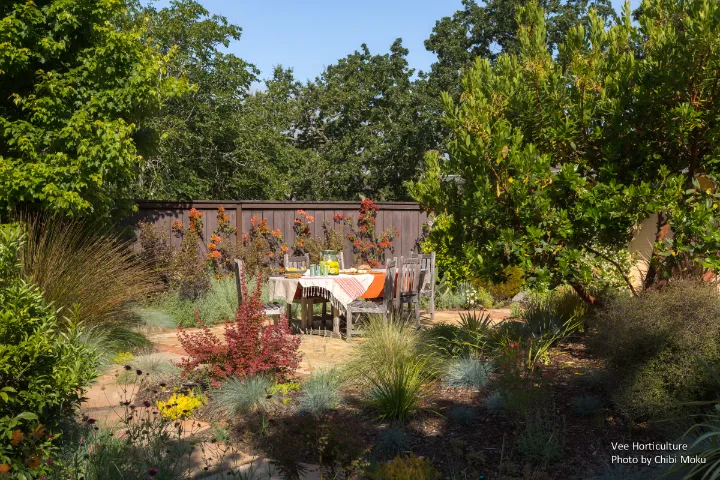
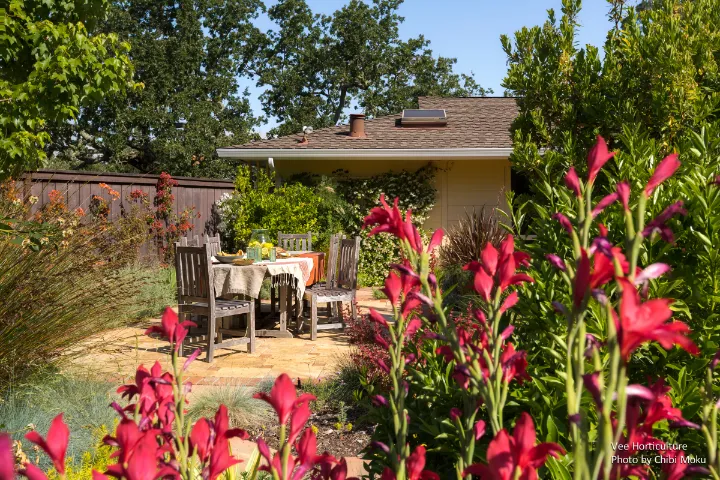
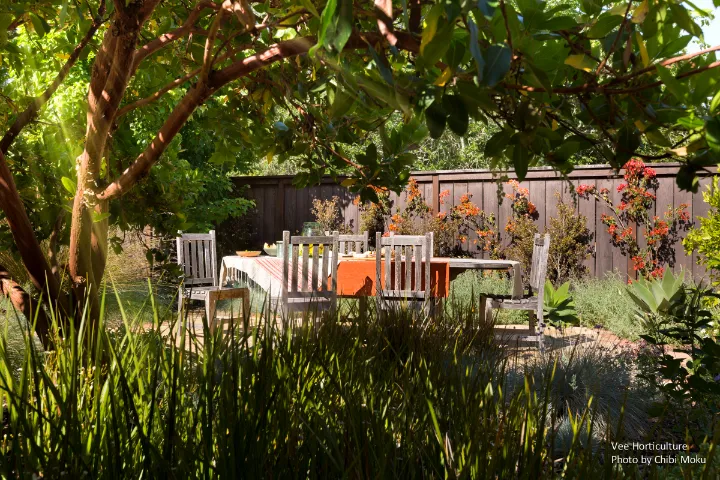
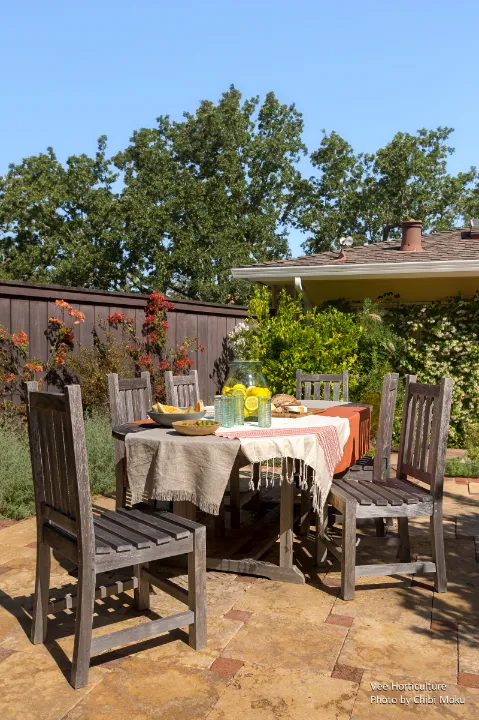
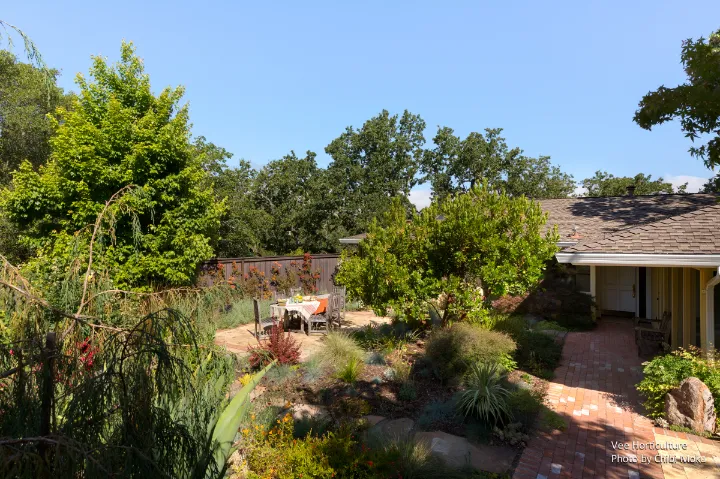
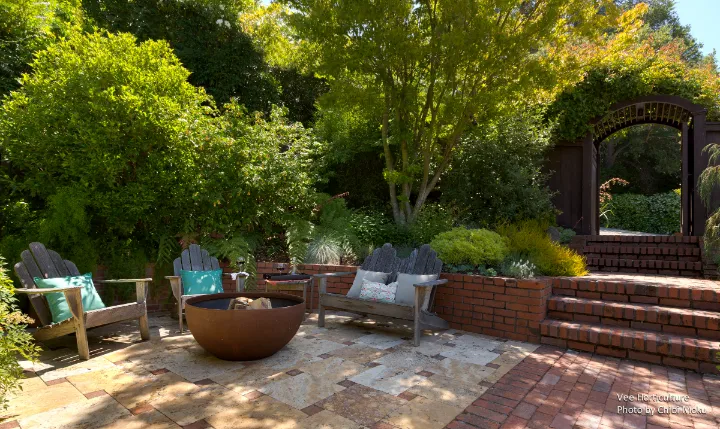
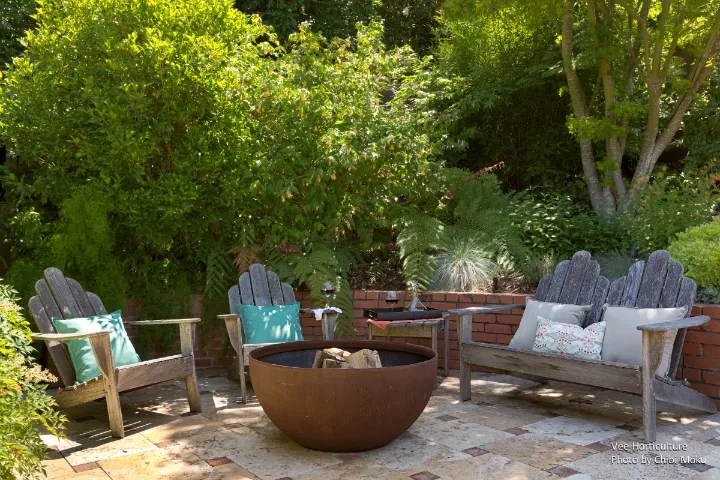
This Bay Area landscape project by Vee Horticulture in Berkeley, California is a great example of how urban garden design can become a complete sensory environment rather than a visual backdrop. Working within the built-out fabric of San Francisco Bay Area neighborhoods, designer Vanessa Kuemmerle treats the garden as a response to what already exists, shaping new outdoor experiences from tight footprints and established structures. As she explains early on, “Here in San Francisco almost everything’s already been built out… there’s things that are existing that I’m responding to.” That approach creates a garden that feels intentional, layered, and deeply site-aware.
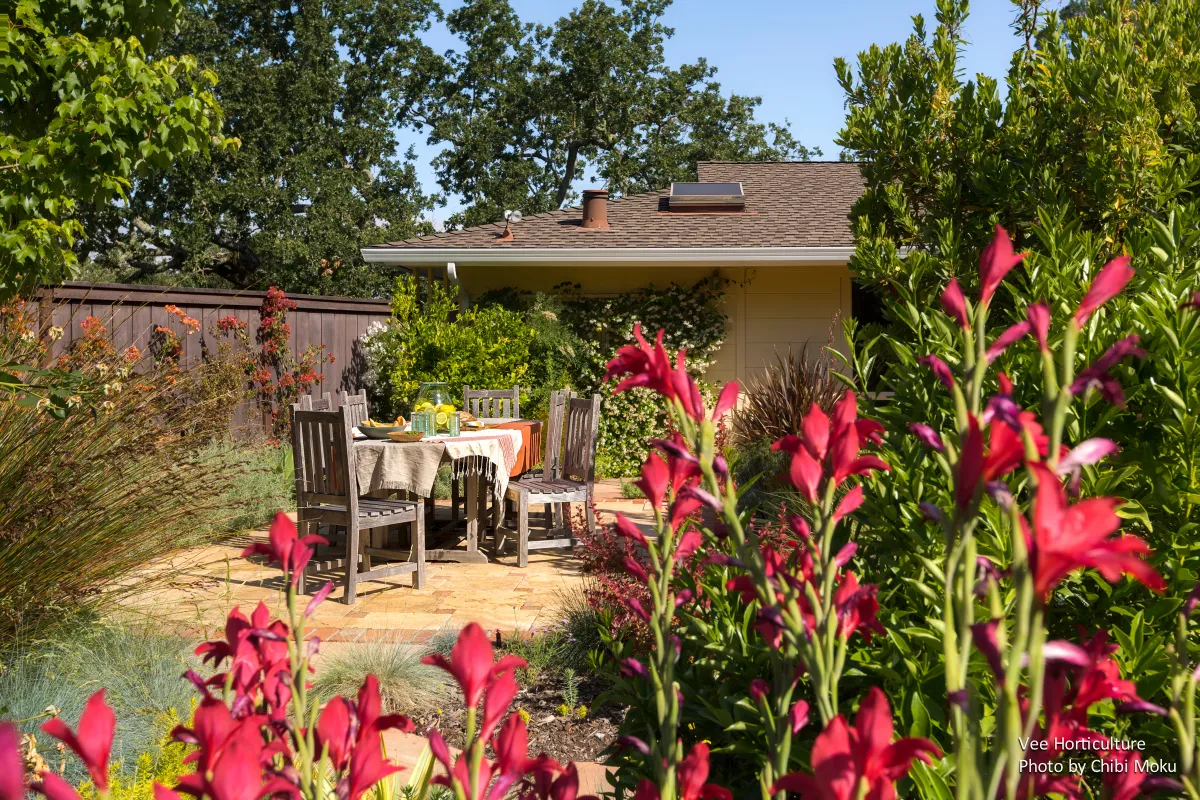
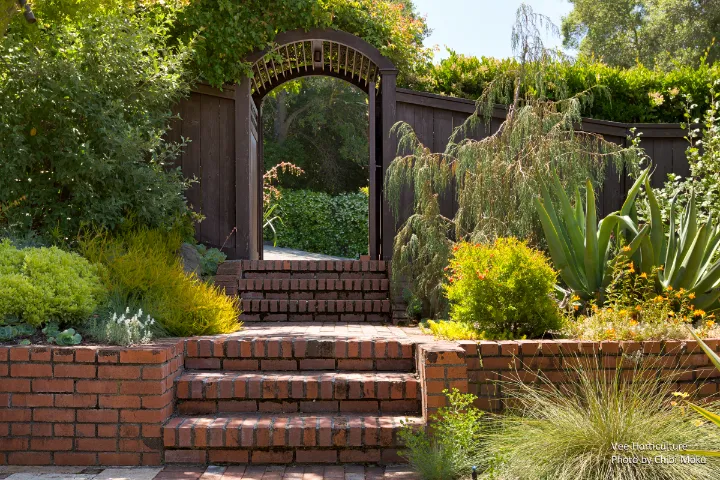
The design is organized as a sequence of outdoor rooms that support daily ritual and social life. Vanessa describes her clients as thoughtful and active, noting that the space needed to flex between quiet mornings and entertaining: “They plan to entertain… have some coffee out there in the morning… and once in a while… they have table tennis tournaments out there.” Instead of leaving the yard as one continuous surface, she breaks it into distinct zones, starting with the arrival experience. “The first space that we broke it into is the front entry,” she says, anchoring it with a newly built gate and a playful architectural gesture: “There was already an existing rose and we jacked the rose up and built the gate underneath.” The entry becomes a threshold, not just a path.
Plant selection in this project is treated like palette-building in architecture. It is all about texture, scent, scale, and surprise, with bold specimens used to expand the feeling of space. Vanessa explains her intent clearly: “Wanted to make sure that there was good texture and colors and foliage and flowers and smells and sounds and sights.” She highlights sculptural plants like octopus agave (Agave vilmoriniana) and rare spiral aloe forms, using them as focal points that read almost like living objects. She also moves and features a trident maple, calling it out for seasonal drama: “Flame red in the fall… absolutely gorgeous as a trident maple.” These choices reflect a designer thinking in elevation, silhouette, and rhythm, not just garden variety.
What makes the work especially distinctive is Vanessa’s belief that gardens should be designed through the full body, and through time. She frames the concept as more than the traditional five senses, adding growth as a design material: “The garden… that’s all about the five senses… but then there’s this added thing of time.” She’s designing not only for what looks good on installation day, but what will evolve into a sanctuary years later. Her design philosophy is rooted in attention and observation: “The thing about a plant is you actually have to listen to a plant… so you have to pay attention.” The result is a landscape that feels intimate and playful, while still being architectural in structure, circulation, and layering. It’s a garden built to mature with its owners, and to reward them more every season.