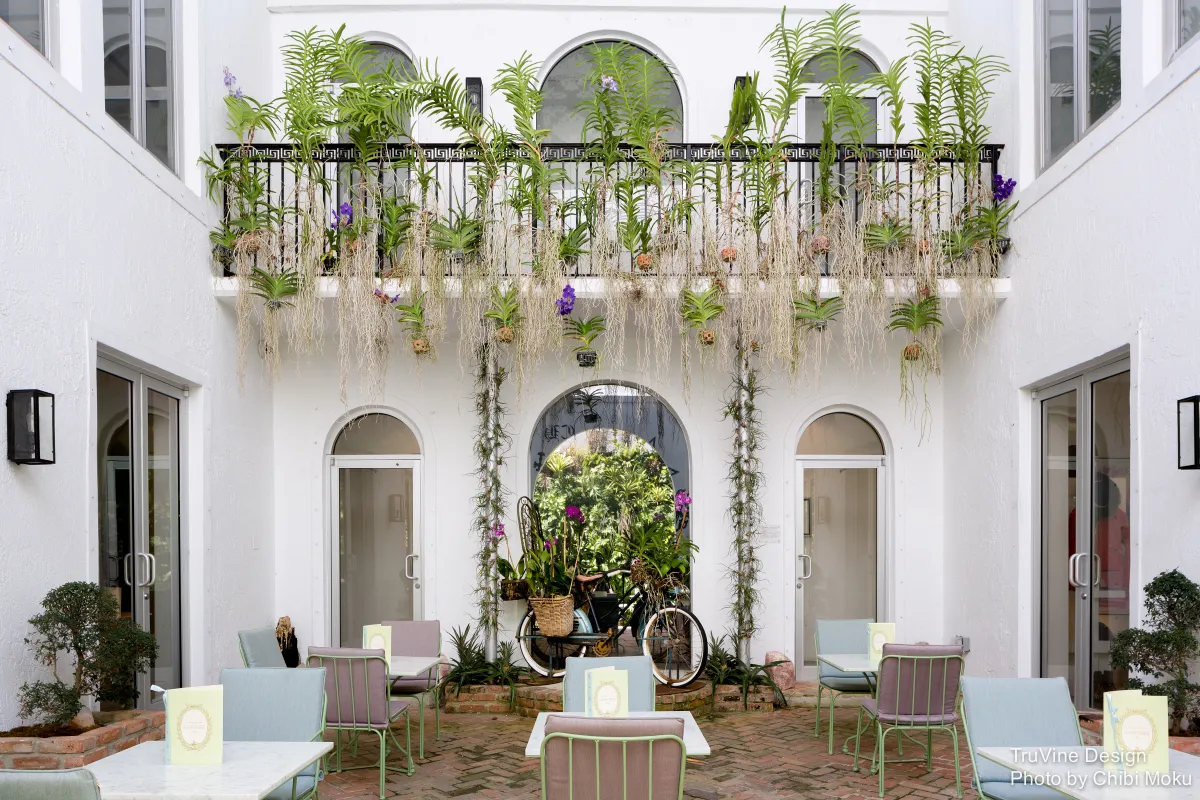
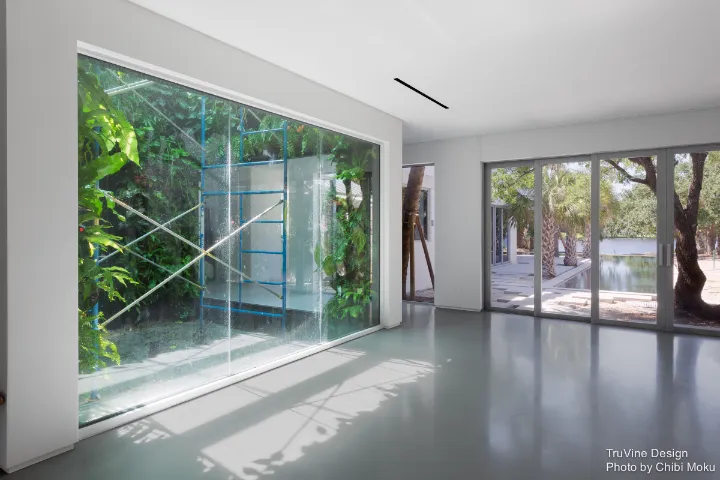
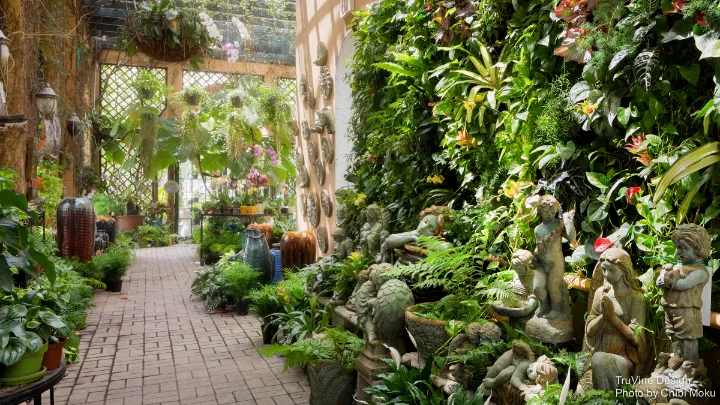
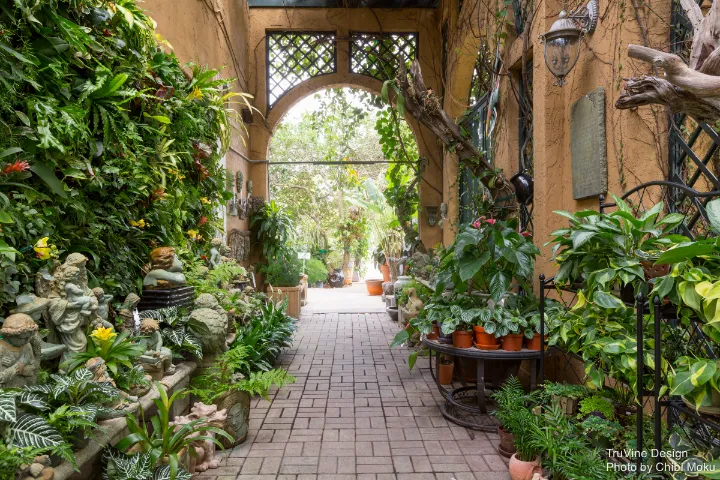
In South Florida, where heat, glare, and hard urban materials often dominate the streetscape, Jeff Allis of TruVine Design treats the living green wall as both landscape and architecture. His approach frames vertical gardens as an effort to “emulate what is in nature living on a rock face or living in trees,” but with the discipline of real horticultural planning so the system stays alive long-term. Jeff describes his work in a way that feels half designer, half curator, traveling nursery aisles like a material library: “I look at every plant, inspect every plant… I have to be aware of the growth stage… I’m looking for colorful… shade oriented plants.” In TruVine’s process, the wall isn’t just greenery applied to a façade. It is an engineered micro-ecosystem designed around light conditions, plant maturity, texture, and performance in Florida’s climate.
The construction method is deceptively simple but extremely intentional. Jeff begins with a site analysis, then builds the wall using rough framing (or direct attachment depending on surface conditions), and installs felt panels with pockets arranged in a shingled pattern so the wall behaves like a vertical watershed. The heart of the system is irrigation: “Irrigation is probably the biggest challenge and the most interesting aspect of a wall,” with interconnected drip lines that rely on gravity so water falls downward “just like mother nature.” The felt becomes both structure and soil substitute, retaining moisture while allowing replacement plantings if something fails: “If I do have a plant that does not live I can simply take it out and replace it.” The design intent is not forced perfection either, since Jeff embraces natural variation, even allowing volunteer seedlings to remain when they fit the composition: “Nature will throw something in here… and you can leave it.”
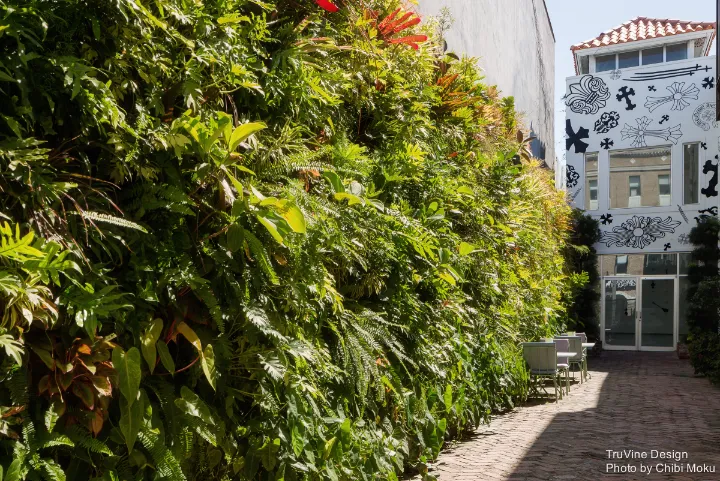
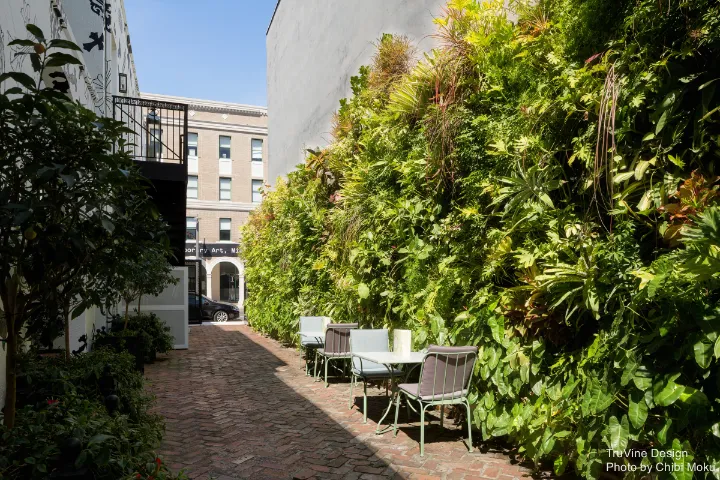
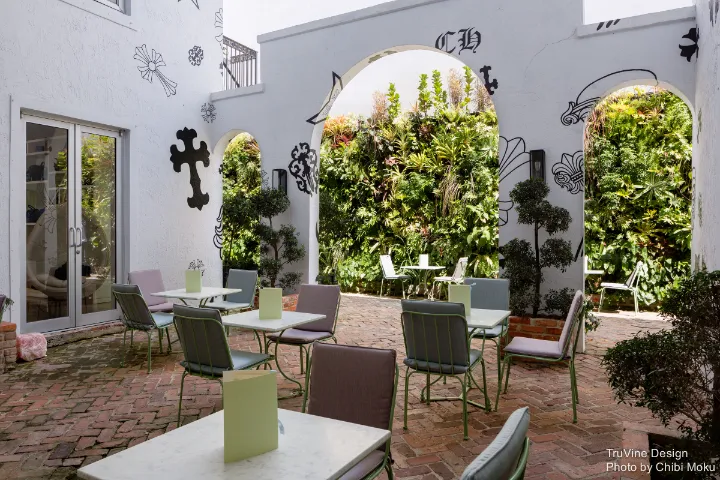
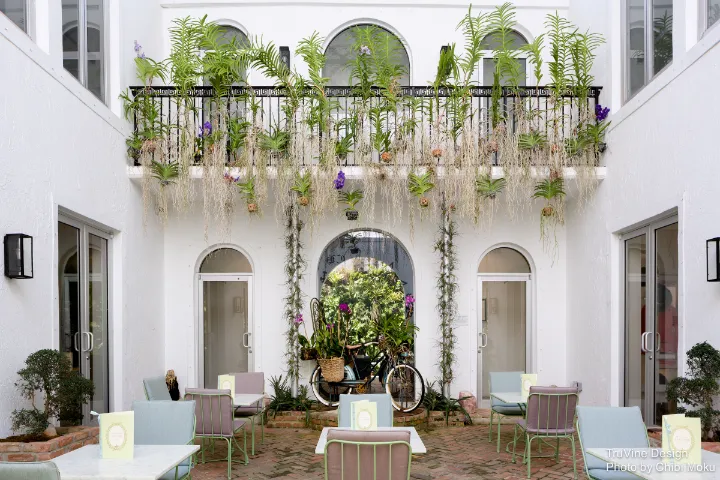
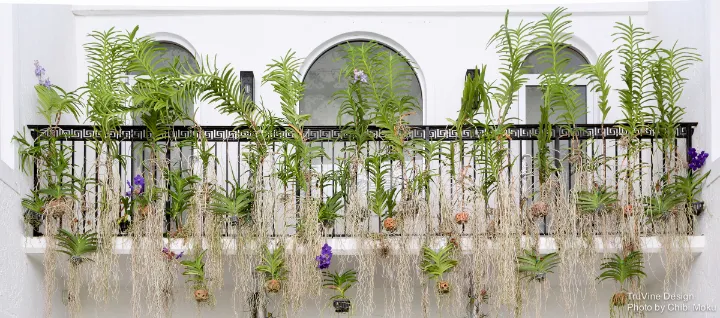
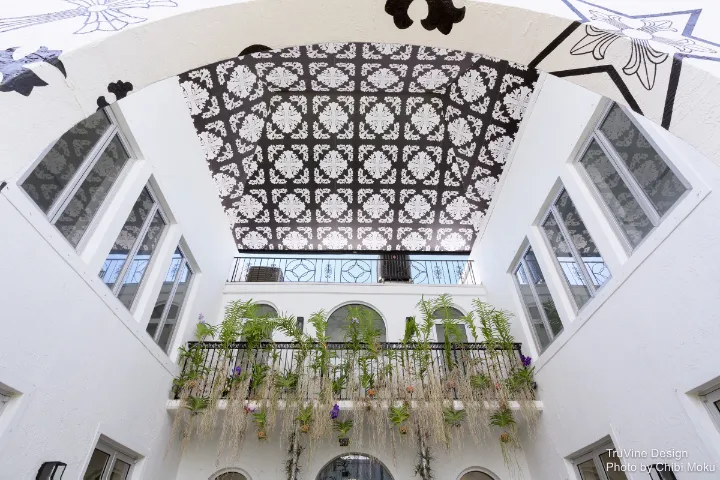
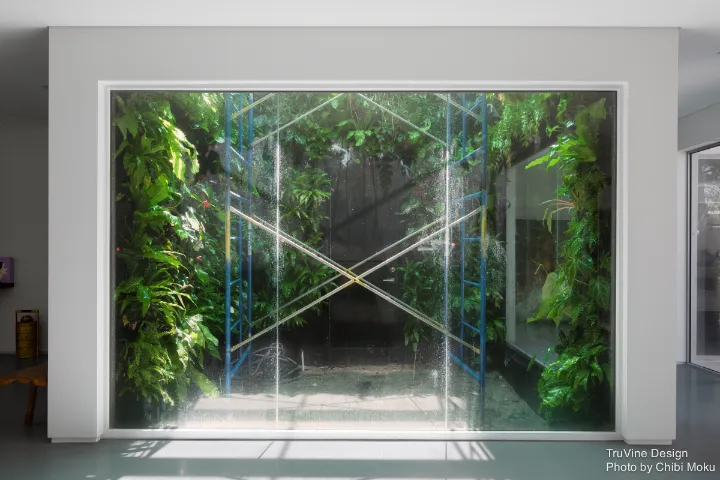
One of the most striking examples of TruVine’s impact is the Chrome Hearts installation in the Miami Design District, where a dramatic vertical wall becomes an entry sequence rather than background decoration. Jeff describes the transformation clearly: taking a “brick and cement and sterile” urban environment and turning it into a “lush soft oasis… tranquil,” using scale (an 80-foot-long wall rising roughly 20 feet high) to make landscape feel architectural. Across these projects, TruVine’s work is less about ornament and more about atmosphere, using living material to soften edges, reduce the psychological harshness of built form, and introduce what Jeff calls the real reason people respond to it: “Plants, very simply, are positive energy… and who doesn’t like positive energy.”